OKLAHOMA CITY, OK
Ice Management, Salting & De-icing in Oklahoma City
Salting and de-icing for lots, entrances, sidewalks and dock aprons across Oklahoma City — because around here, ice causes more trouble than snow.
Central Oklahoma gets more ice than heavy snow. Freezing rain and sleet can glaze a parking lot, a front walk or a set of steps with almost nothing on the ground to push. That thin, clear layer is the bigger slip risk, and it's the part of a winter storm a machine can't scrape away.
We salt and de-ice for businesses, property managers, churches, HOAs with common walks and homeowners with a steep driveway, on a seasonal agreement or on call.
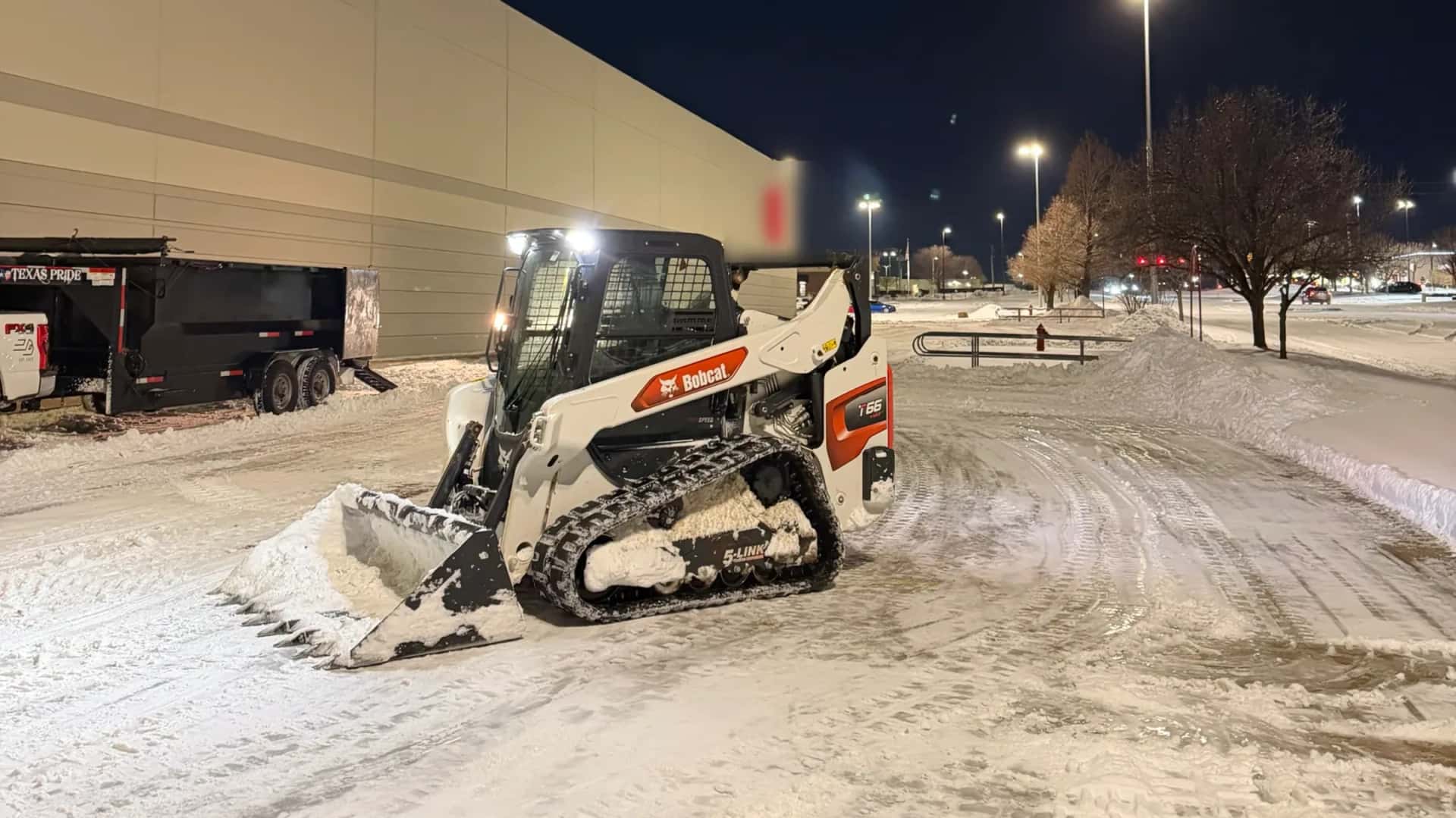
We're the same Mustang crew that runs skid steers and loaders on dirt jobs the rest of the year. When snow comes with the ice, we plow the lot first and treat what's left after.
What ice management covers
- Pre-treating lots and walks before freezing rain or sleet
- Salting and de-icing after snow is cleared
- Sidewalks, entrances and the path from parking to the door
- Steps and ramps
- Drive lanes and parking areas
- Loading docks and dock aprons
- Return passes on the spots that refreeze
- Steep residential driveways
How ice treatment gets planned
Point out the slick spots
Send photos or a site map and mark where people walk: doors, ramps, steps, the path in from parking, plus any spots you know stay icy.
Choose seasonal or on call
Ice treatment can sit inside a seasonal agreement or be something you call for when ice is coming. Either way, we settle ahead of time which areas get treated and in what order.
Pre-treat when there's warning
When freezing rain or sleet is on the way, salt down ahead of it makes it harder for ice to bond to the pavement. It won't stop all ice, but the cleanup after goes easier.
Clear, treat, come back
Anything piled up gets cleared first — salt thrown on top of a layer of snow or sleet mostly goes to waste. Then the surface gets treated, and the spots that freeze again get another pass when that's in the plan.
Why a plowed lot can still be slick
A machine takes the snow off, but it leaves a thin film behind, and daytime sun turns some of what's left into water. Once it gets cold again after dark, that water freezes right where it sits. A lot that looked fine at sunset can be glazed by morning.
Some spots ice up first and stay that way longest. Snow piles make it worse, melting during the day and sending water across the pavement to freeze overnight.
- North sides of buildings and shaded walks
- Low spots and drains where meltwater collects
- Pavement downhill from snow piles
- Steps, ramps and dock aprons
Pre-treating vs treating after
Pre-treating means salt goes down before the freezing rain or sleet arrives, so the first layer has trouble sticking. It pays off most on entrances, walks and ramps, the places people are on foot.
Treating after is what happens once ice has formed or the lot has been plowed. It's slower, because the salt has to work through what's already there. Salt also works less well in deep cold, so during the hardest freezes some spots need repeat treatment.
No treatment takes away every slip. What it does is cut down the slick spots where people walk and drive, and that's the job.
Walks, steps and steep drives
Ice on a walkway is a different job than ice on open pavement. A church wants the walk from the lot to the doors treated before a service. An HOA wants the common sidewalks done before residents head out. A homeowner with a steep driveway may just need to get the car down to the street.
What drives the cost of ice management
Ice work is figured from the areas you want treated and how often a storm makes them need it:
- How much pavement — the whole lot, or just entrances and walks
- Walks, steps and ramps, which take more care than open pavement
- Pre-treating, treating after, or both
- Return passes for refreeze over the course of a storm
- Whether it's paired with plowing on the same visit
- A seasonal agreement or on-call treatment
- Access and timing — overnight or before you open
Every lot is priced on what's actually there. Text photos or your lot address to (572) 273-1427 and you'll get a real number back.
⭐⭐⭐⭐⭐ 5 stars on Google from customers across the OKC metro
Areas we serve
How snow and ice work runs in the towns we cover most.
Ice management questions
- Why does our lot get icy after it's been plowed?
- Plowing leaves a thin layer, and whatever melts by day can freeze again after sundown, worst in shaded corners and low spots. Treating after the plow handles that.
- Is it worth pre-treating before an ice storm?
- For entrances, walks and ramps, usually yes. Salt put down ahead of freezing rain or sleet keeps ice from grabbing the pavement as hard and makes it easier to clear later. It won't stop every slick spot.
- Does salt still work when it's bitter cold?
- Less well. In deep cold, salt works slower, so treated spots take longer to open up and may need more than one pass.
- Can you treat sidewalks and steps, not just the lot?
- Yes. Sidewalks, entrances, steps, ramps and dock aprons are all part of the work. Mark them in your photos.
- Can salting go into a seasonal agreement?
- Yes. That puts ice and snow on one plan. On-call treatment works too. Our commercial snow guide compares seasonal agreements with paying per event.
- Do you treat home driveways?
- Yes, especially steep ones where a glazed slope keeps the car stuck at the top. Send a photo of the drive and where it meets the street.
Get Your Free Quote
Tell us what you've got and we'll come back with a real number.
Fastest way: call or text
Most people text a couple of photos and get a number back the same day. The form works too — this is just quicker.
“Best customer service. Honest workers. Quick, efficient and super responsive. I was very hesitant at first but they came and took care of my home as if it was theirs. I cant recommend these guys enough!”Takes a minute. No obligation, and no charge to look at it.